Tuesday, July 23, 2019

My Reading Journey

Let me set the scene. It was a warm Sunday in July. Actually, thanks to Amazon, I can tell you it was the 23rd of July in 2017. My husband and sons were on day two of an eight day trip to Canada. The world closely resembled a dumpster fire, kind-of similar to now. Anxiety, my old friend, was sky high. As I walked the dogs that morning, I left a message for my friend Cindy on my Voxer app. I figured she’d listen to it later as she made her way about her day in Pennsylvania. I wish I’d saved her reply, which came while I was still walking, but alas, I didn’t. Suffice to say, she suggested I download a romance book to read, that maybe it would help me to relax and let go of worries. I loved reading young adult books, but in romance I was guaranteed a happily ever after. Cindy somehow knew that I needed that, more than I’d ever realized.

Today I sit here typing this blog post on July 22nd, 2019. Seven hundred and twenty-nine days ago I downloaded my first romance book to my Kindle App. Since then, on Amazon alone, I’ve read five hundred and five books. That doesn’t count rereads; that doesn’t count the books I’ve purchased at our new independent bookstore, Hartfield Book Co.; that doesn’t count books I’ve borrowed from our local library in print or ebooks; that doesn’t count any of the picture books, middle grade books, or young adult books I’ve read. Simply on one app, I’ve read 505 romance books in 729 days. 

Whoa.

In a few weeks I’m joining forces with my local bookstore, Hartfield Book Co., to celebrate romance books for Bookstore Romance Day, something that independent bookstores across the country are doing on August 17th. I’m honored to be a part of this. One thing I hadn’t realized when I started reading romance books 729 days ago was that there was a stigma in the eyes of some when you declared your love for this genre. 

Weird, right?

I can’t remember when I began reading romance books. As a junior high student, I know I devoured this series as fast as they could come out:
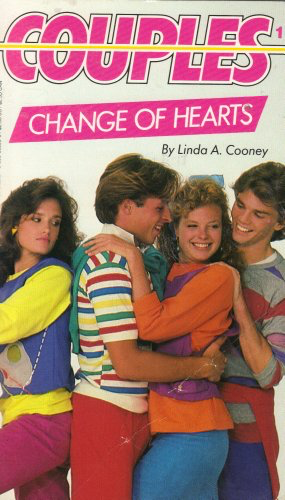

I don’t remember talking to a lot of people about my reading, I read for my own enjoyment. I loved the characters in these books and my heart would be crushed when relationships would break up. For that reason, maybe they weren’t true romance books. According to Romance Writers of America, a romance book must…

  1. Have a love story as part of the central storyline.
  2. Have an emotionally satisfying and optimistic ending, or the happily ever after. (Otherwise known as a HEA.)

So, I’m not sure if Couples would be true romance books, but they’d set me on the path.

Meanwhile, I was surrounded with reading role models. My parents read every night before bed. My friends read, though we didn’t typically discuss books. My grandma had a stack of these books next to her armchair in her living room. 
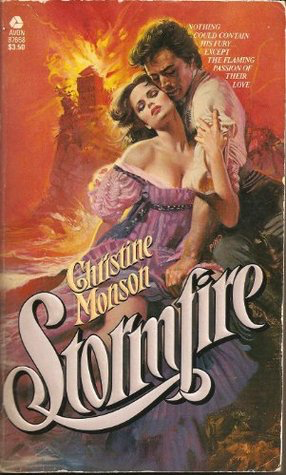

I knew my grandma read romance, though I think she bought them used at her auction. It wasn’t a big deal, just what she read. 

As I reached high school, my reading taste changed. I was busier with more homework, so I read for pleasure less. When I did read, I typically could be found with a book from this author:
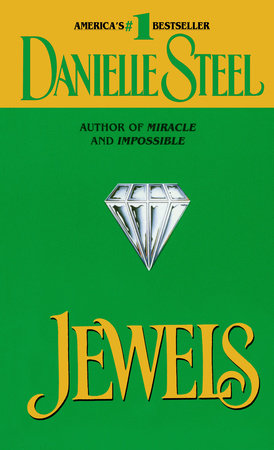

I was obsessed with Steel and read everything I could that she’d written. 

In college I found less and less time to read. Once in awhile I’d go back and read an old favorite from Steel, reread Larry McMurtry’s Lonesome Dove, that I loved, or share mysteries with my parents like books from Dick Francis or Mary Higgins Clark. My reading life wasn’t consistent, but being a history major meant a lot of my daily reading was for school.
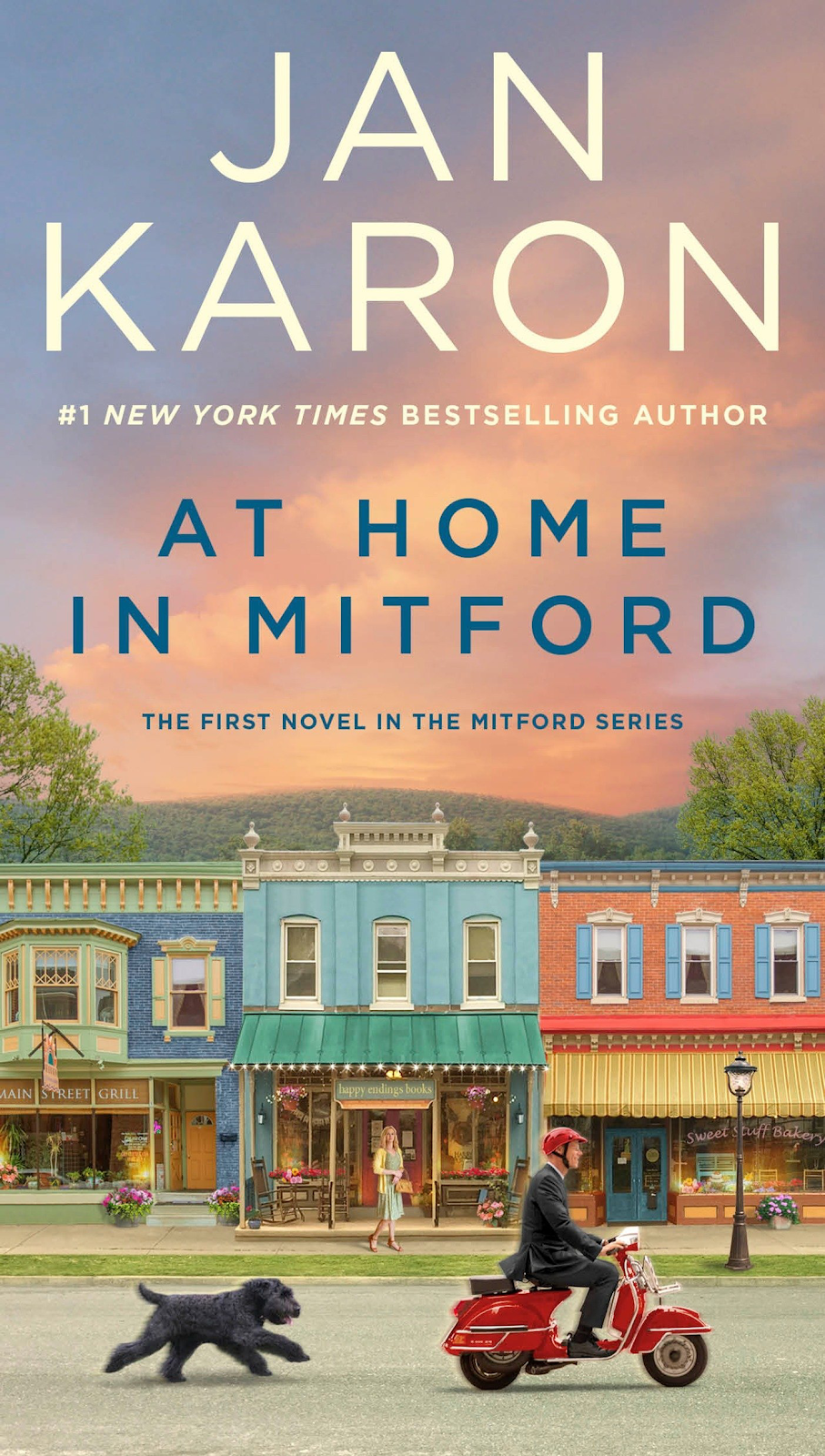
It wasn’t until I was pregnant with Luke that I began to devour books again. I found a series called The Mitford Series by Jan Karon that I loved. Here was a sweet romance story between a pastor and his neighbor set in a small town in North Carolina. Not a traditional romance, but the elements were there. 

Flash forward from Karon’s books I read in 2002 until now, seventeen years later. I’ve read a lot of books over the years. I devour picture books on a regular basis. Depending on the year, I read more or less for my classroom. But in the last two years, one constant in my reading life is my love of the romance genre. I’m always reading a romance book, no matter what else I’m reading. 

Being a romance reader has had benefits I hadn’t anticipated. One, it helps when I’m stressed or worried. Reading has always been that safe place for me, but some of the books I read in the young adult or middle grade categories definitely wouldn’t be considered to have a HEA. Whether it is the world we live in or the age I am, I need the majority of the books I’m reading to be that safe place to land. I need to not have to worry about my characters being alright, and I’m ok with that. This reminds me that depending on their life outside of my classroom, my students might need lighter or heavier books to read.

The other thing romance has reinforced for me is the lack of judgement we need to have around reading. I’ve always allowed my students to read whatever they desire, but that is a constant discussion with colleagues and parents. Whether it’s graphic novels, rereading books, audio books, or what have you, I’m here to support their reading, not shame them for it. 

So how about you? What genre do you love reading? Share and we can obsess about books together. And if you need a romance book recommendation, check back on the 17th or send me a message, I have lots of thoughts on that.

Sunday, July 21, 2019

Romance Book Review - Bootleg Springs Series

Well, it’s been awhile. This summer has been crazy busy, but also deliciously unscheduled for the most part. I’ve spent my warm Illinois summer days furiously typing away at book two in the romance series I’m writing and just finished it a few days ago. Before diving into revisions of book one and two, or even working on the upcoming school year, I have a bit more writing to do. I owe our indie bookstore owner a blog post for something fun in August and I need to write a post to run on my blog for the same day. 

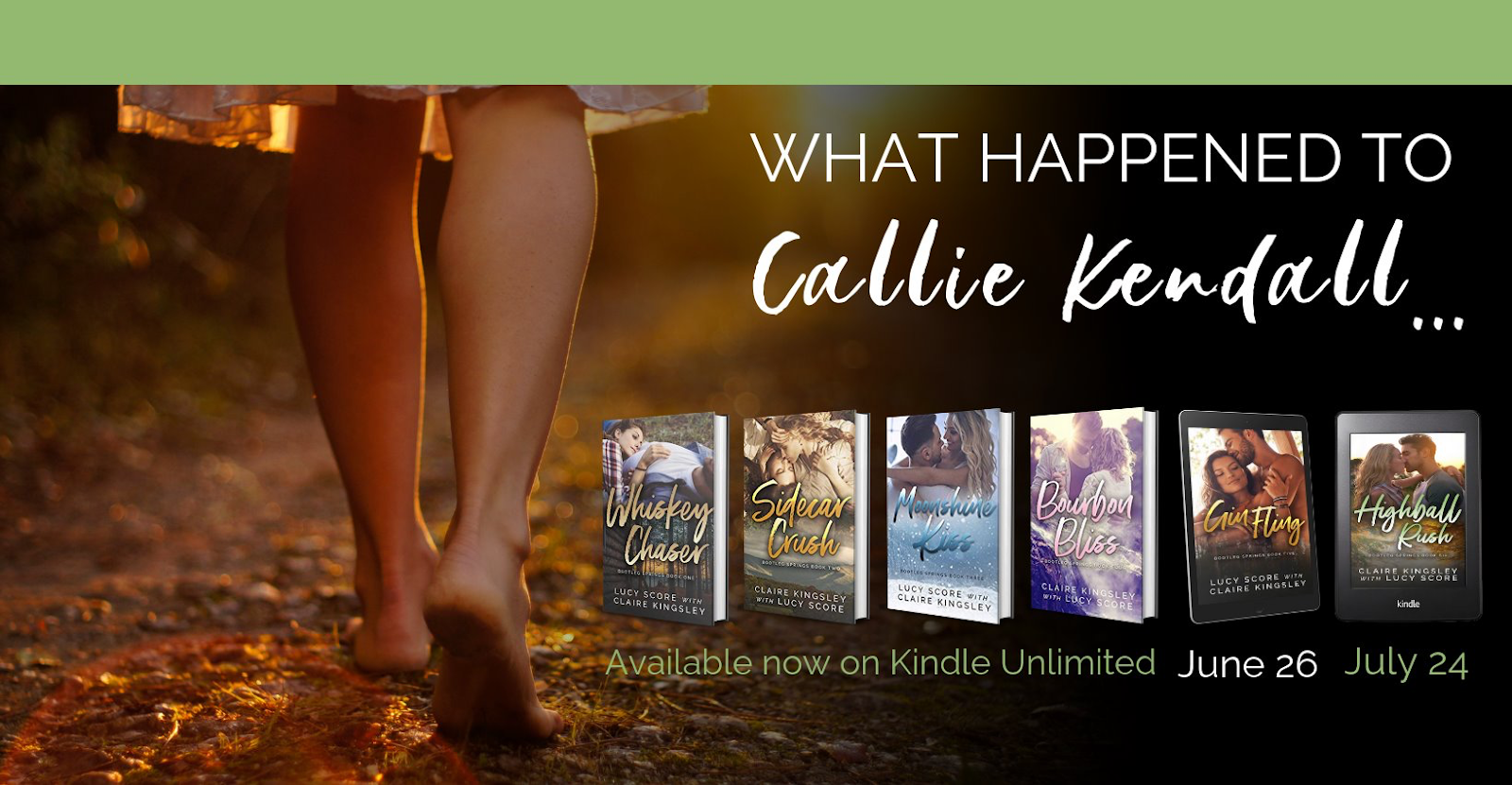
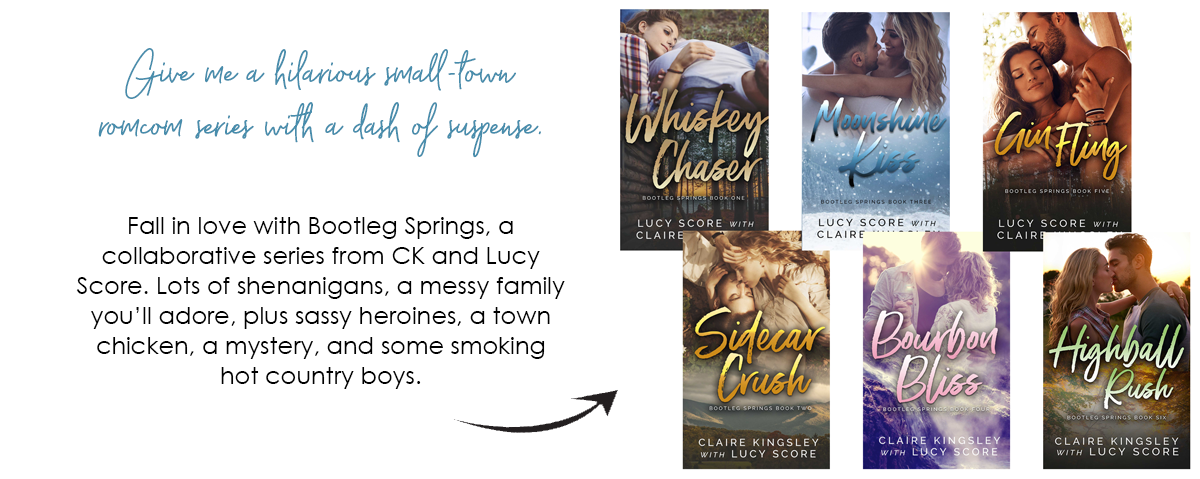
While I sat down to write those posts, I got distracted, as usual. I’ve been rereading a book series over the past few days in anticipation of the release of the sixth and final book on July 24th. When I began reading book one, I found myself taking screenshots of pages to send my friend, Karen, who was going to reread them as well. I hadn’t remembered just how funny this series is. In case you are in the mood for a laugh out loud romance series set around a family living in small-town West Virginia, let me introduce you to Bootleg Springs.

This series is unlike anything I can remember that I’ve read. It is written by two of my favorite authors, Lucy Score and Claire Kingsley. They take turns, alternating books, which is a concept I'm absolutely going to talk to my students about in the fall. I think that would be a fun way for them to write with a friend. Sometimes they try to write in the same document at the same time, which just ends up being a mess.

In Bootleg Springs book one, Whiskey Chaser, we are introduced to Scarlett Bodine. Scarlett is the one girl in a crew of Bodine brothers. She is tough, no-nonsense, loyal, and hilarious. Scarlett’s world takes a new path when Devlin moves into his grandmother’s house next door. He’s hiding out from a bit of a political mess he’s found himself in as a State Senator.

What follows is a story filled with humor, quirky characters, everything good and bad that comes with small towns, and some steamy scenes. And that’s just the first book. In the next four (so far), I’ve fallen more and more in love with the Bodine family and their little town of Bootleg Springs. 
The other thing about this series that I’m fascinated by is that it doesn’t unfold like the majority of contemporary romance series. Like most series that I read, each book has another couple at the forefront, the other characters still in the background so that you don’t really let them go. Unlike anything else I read, there is another storyline that is told over the course of the series. 

Callie Kendall was a teen that visited Bootleg Springs in the summer with her family. Twelve years before the series begins, she turns up missing, never to be found again. Through the course of the first five books, more information comes to light about the circumstances around her disappearance. 

In just a few days with the release of Highball Rush we will finally know what happened to Callie and I cannot wait. I have so many theories of what happened to Callie, of what will happen in book six to Gibson, I wish I could speed up summer just for a moment. Then, of course, it needs to slow back down. Check out Bootleg Springs if you’re in the market for a fabulous read. Let me know what you think and regardless of what you pick up, happy reading. 

Wednesday, June 26, 2019

Writing Wednesdays - Fiction Writing in the Classroom


Today is my twenty-sixth day of summer. Seems unreal that we've already been out of school for that long. For half of the time I've been out of school, my family has been traveling around Colorado. My oldest is still there training for Cross Country at an altitude that you can't come by in Illinois. My youngest has just headed with my mom to visit my sister and her family. Chris and I are home with the pups now. It is quiet. 

This morning as I ran one dog, then the other, my brain turned automatically to the next school year. Not that I want to rush it, please understand. There are forty-eight glorious days of summer ahead of me until my first inservice day and I plan on soaking up every last one of them. But it is during the summers that I plan and think of what I'd like to change for the following year. It's the only time I actually have the time to do that work, to mull it over without having to implement something right away. I can let ideas marinate before trying them out in the frantic pace, at times, of the school year. 

One thing I've been thinking about this summer is from the end-of-the-year reflections my students filled out just a few weeks ago. In regard to writing, their fiction pieces constantly rank as some of their favorite writing. When asked what they'd like different in our class, time and time again it came down to "more time to write fiction" and/or "longer to write my fiction stories." 

Sitting down today in a coffee shop to work on my own fiction story, I feel like a bit of a hypocrite. This one began on January 21st and I'm only halfway done. Some days I type furiously, words stacking upon each other and bringing me a total that makes me smile. Other days I surf Pinterest, looking for what I know in my heart the main character's house looks like, but I need a visual. Still other days I spend creating a timeline for the story. 

This is often not the way my students get to write fiction. 

We are tied to timelines, units, and quarters. At the end of the year I wondered how I could make it more authentic.

Since I'm in this new writing adventure, I now belong to Romance Writers of America, or RWA. RWA sends out a monthly journal called Romance Writers Report with articles from other romance writers and I was reading the June edition the other day. In it an author named Amanda Renee has an article called Story Bibles and Style Sheets. As I read the article, I was amazed. What Amanda terms her "story bible" is what I had created in Google Sheets to keep track of my books. As I read what Amanda uses her story bible and style sheet for, and I reflected on my own Google Sheet, I wondered why I hadn't shown this to my students. 

Real quick, in case you want to try a "story bible", mine looks like this. I have a Google Sheet document for my series with the following tabs:

  • Characters: The first tab is for the main characters of each book. Going across the columns I have their name, nicknames, age (birthday), pets, family, occupation, hair, eyes, height/weight, vehicles, styles, hobbies, slang, etc. 
  • Timeline: Second tab is the timeline for the story. For me, since it's a series, I have the timeline for the series and how it overlaps. I use an actual calendar for my books, so it says, "Chapter 1, Book 2 - April 15th" then a quick few lines about what the chapter is about. 
  • Setting: I have a tab with setting notes. Any locations in the book are detailed with description here.
  • Food notes: I mentioned a lot of food in my book. If/when I publish it, I'd either link to the recipes I mentioned on my website or share the recipes. I keep track of the meals here.
  • Media mentioned: I talk about a lot of songs, books, etc. I have a tab where I keep track of that. 
  • Threads to resolve: Things I need to tie up I list here. 
  • Ideas: I'm often flooded with ideas for future books or for later in my story. I make a note of it on this tab so I won't forget it, but can come back to it later. 
So, what am I thinking this means for my students in the future? I need some more walks/runs to solidify my idea, but right now I'm toying with the idea of an open-ended fiction assignment. I'm thinking at the start of the year I could show them how to create a story bible in Google Sheets. That maybe we have monthly "goals" like August, get an idea and set up your story bible. And have an expectation that they're writing every month, but nothing needs to be "finished" in a matter of weeks. Right now I can't decide if I'd want them to give me a finished piece during the school year, or just be able to show me their writing progress each quarter as a fiction writing grade. Meaning, I could sit with them towards the end of the quarter and we could have a conference where they share what worked for them that month in writing fiction, what didn't. 

That's where I'm beginning. I'm thinking of opening my room at lunch and maybe before school a few days a week for extra writing time. I'm thinking of quick lessons I could share that have helped me. But mostly, I'm trying to dream up ways to get time for kids to write stories they love for themselves. If you've done anything like this with your students, or if you have any suggestions, please share! I can't wait to think more about this in the coming weeks. 

Wednesday, June 5, 2019

Writing Wednesday - Writing through Reflection


Today's post is about writing to reflect. Today on my fifth day of summer, I'm thinking back to my last days with my seventh graders this school year. My friend Colby isn't out yet for summer. I just saw a post from him somewhere on social media yesterday that his class looked the same during the school year as it did at the end of the school year. That really resonated with me.

My students in seventh grade know how school works. They wisely asked during the days leading up to the end of the school year when our grades were due. I was honest and said they were due Wednesday by noon. Our last day would be Friday. Someone smiled in first hour and asked if we'd be watching movies that entire last week then. I looked at them and smiled while the rest of the class laughed, including the kid that asked. Nope. We had days left together and I would be filling them up right until the end.

Last week wrapped up my 23rd year in education. In teaching kids from preschool through seventh grade I've figured a few things out. The more I stray from our typical schedule, the more poor behavior choices increase. The more I close down the classroom, the more the kids close down as well. As a result, I tend to teach right up until the end. Not with time fillers, but with lots of reflection. With the stuff we've done all year - time to read, time to write, time to share. 

We also have time to reflect. I asked each student to fill out a reflection of our class and our year. I break down the components of our workshop and ask them to tell me what they liked and disliked about all of it. I ask how they grew as readers, as writers. I ask what I could have done to make the year better for them? I ask how they felt about coming to our room each day.

Sometimes their reflection is hard to take. However, when that's the case, I feel good that I have set up a situation where they feel like they can be honest with me. These forms aren't anonymous, but the kids are still truthful. Sometimes their reflection guts me. Like the note on the bottom of one from a kid who was far from easy, who I wondered if I connected with, and who wrote me a note so honest and heartfelt that I sat in my classroom and cried. I'm so grateful that I had the chance to teach him, to teach them all.

And that was what our last four days were filled with - Padlets to share our reading lives with each other, with you, and with my students next year. Reflection on the class, on ourselves. And all too soon, our last day was there. As I set the time for the last time of independent reading a kid shouted out that I was making him sad, I should say it was our last time. When we sat down to watch the amazing short documentary on Jason Reynolds (check it out HERE), kids laughed that I had two "Jasons" in my life - Jason Momoa and Reynolds, that maybe Chris would be jealous. Grinning, I told them that it was time to write. In each class heads bent over notebooks, over Chromebooks, and fingers flew. I sat in front of my empty notebook and filled the page, grateful for this job I get to have and certain that I wouldn't want to waste any bit of it at the end of the year.

In case you're interested, I've shared our Padlets for the last week below. The first one is the kids' Top Ten books of the year. The second is their Padlet about how much they read and what their favorite book was. Enjoy!
Made with Padlet
Made with Padlet


Wednesday, May 22, 2019

Kate Messner - Writing Wednesday


In June of 2009 I attended a professional development session in my district. The presenters were talking about Twitter and how important it was for their teaching life. At the time all I knew about Twitter was that Ashton Kutcher had challenged either Larry King or CNN to see who would have more followers first. It didn’t seem like it was for me. These teachers, who I respected, went on about how important it was, so I joined.

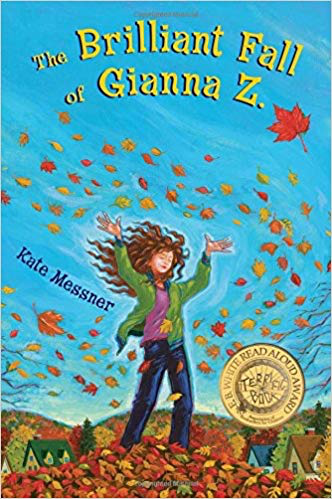
I began poking around, finding other educators to follow, and that brought me to Kate Messner. Kate was teaching seventh grade and I loved what she was sharing from her classroom. After connecting a few times on Twitter, I remember reading a tweet that Kate was publishing a book, The Brilliant Fall of Gianna Z. Just a few months later in the fall, I went to my local bookstore and Kate’s book was on display. I tweeted it to her, so excited, and she said it was the first time she had seen her book “in the wild.” I was beyond thrilled for someone in my profession to be following her dream. I loved the book and we developed our family reading night around in that fall with Kate Skyping in. It was magical.

Over the years I’ve met Kate several times, had her Skype with my class more times than I remember, and seen her present all over the country. I’m thrilled to welcome her to my blog so she can share her writing life with us all. Welcome, Kate!


Talk to me about your writing life - what does it look like?

I tend to do my brainstorming, scribbling, and planning in a notebook (or on big sheets of paper, with colored pens) and then when it comes to actual drafting, I switch to my laptop and Scrivener software. I always do some kind of outline, but what it looks like depends on what the story needs. Sometimes it’s a traditional sort of outline, sometimes it’s more of an idea map or story web, and sometimes it’s something else entirely.

When I’m not traveling for school visits or research, I try to keep a pretty regular writing schedule. On a typical day, I get up at 6 or 7 and answer emails and do other work until my daughter leaves for school at 8. I write from 8-11:30 or so and then take a break to go to the gym until about 1 or 1:30. When I get home, I have lunch and visit with my husband for a while, and then I’ll get back to writing by 2:30 or 3 and write until it’s time to make dinner at 6 or so. The rest of the night is family time, and then I get up and start over.

Where do you get your inspiration?

Everywhere - and that’s why I’d be so lost without my writer’s notebook. I’m always collecting things - character traits, setting details, little bits of dialogue.

What was your journey into writing?

I absolutely loved writing as a kid, but I didn’t realize that being an author was an actual job you could choose. I grew up in a really small town, and no one I knew wrote books for a job. We never had an author visit our school, and we didn’t have Skype back then, so being an author just wasn’t on my radar as a possibility. I went to college for journalism and spent seven years as a TV news reporter before going back to get my teaching degree, and then I spent a wonderful fifteen years teaching 7th grade English. That’s when I really rediscovered how much I loved writing stories, when I was writing alongside my students, and my first six books were published while I was a full-time teacher.

Were you a writer in middle school? A reader?

I was both - and I went through phases in both reading and writing. For a while, I only wanted to read sad books, and then only poetry, and then only nature books. And I went through similar stages with my writing, so I got to experiment a lot. I still do that, really, which is one of the things I love most about my job. I can write about whatever I choose, and I never get bored.

What was your publishing journey like?

Long? I spent seven years querying for my first book and collecting rejections before it was finally published by a tiny regional press. Later on, my first nationally published book, THE BRILLIANT FALL OF GIANNA Z, was rejected 26 times before I found a wonderful agent and editor.

What is the best writing advice you’ve received?

The best writing advice I’ve ever received actually came from a surly anchorman, when I was a nineteen-year-old aspiring news reporter. I was interning at his tv station and had just submitted a news story to him for review. He pointed to one of the lines -- one that I thought sounded especially journalistic -- and asked, “Why’d you write it like this? Why not just say what happened?” I told him the truth -- that I’d been trying to sound like Sheryl Nathans, an investigative reporter at a competing station whose work I admired. He nodded and said, “Oh! There’s your problem. The job of being Sheryl Nathans is taken. By Sheryl Nathans. You’re going to have to figure out how to say things your own way.”

He was talking, of course, about voice. And his advice has followed me from my career as a journalist, through my life as an educator and into my world as a creator of children’s books. Our voices really do define us.

What is some writing advice you’d like to give either to my students or to other aspiring writers?

Carry a notebook! It’s not only great for collecting ideas; it teaches you how to see the world like a writer. You end up noticing things that other people miss, and in addition to being great for writing, that’s a lovely way to live.

Best thing about being a writer?

My favorite things about being a writer are research (because I love spending my days learning and exploring) and connecting with young readers (because they’re the reason I do what I do).
Hardest part of being a writer?

The middle. Every time I write a new book, I hit that place in the middle where it’s still a crummy draft, and the shine of the new idea has worn off, and all I can do is slog through those in-between chapters. I always have to remind myself that when I finish, I’ll be able to revise and really make it shine. But middles are so tough.

What do you do when you’re stuck?

Go for a walk or run. It shakes ideas loose.

Do you have an “inner editor” voice that is unkind?

I do - but I’ve also learned to turn it off so that I can draft. Otherwise, I’d never get past the first page of anything.

What are you reading now that you’re loving?

I just finished a second read of Laurie Halse Anderson’s SHOUT, which is so powerful it felt like it might catch fire in my hands.

Finally, do you want to share the inspiration for your most recent project?

I just finished work on a my newest novel for kids, CHIRP. It’s a mystery set on a cricket farm as well as a coming of age story about family, entrepreneurship, power, and secrets. The cricket-farm element was inspired by a real cricket farm I got to visit in Vermont as well as by this 2013 report from the United Nations Food & Agriculture Committee, suggesting that eating insects might be one way to solve our food crisis and minimize global warming. http://www.fao.org/3/i3253e/i3253e.pdf

Thanks again to the amazing Kate Messner for giving of her time to share her thoughts with us. If you'd like to find Kate online, here are some links. And, side note, I’ve read an early draft of CHIRP. It is amazing and a book to put on your radar for certain.


Wednesday, May 15, 2019

Writing Wednesday: Teacher Burnout


Over my lunch hour today I watched a video from John Green:


While I thought the video was great overall, there was a part at the end that really made me stop and think. 

John says his brother Hank talks about the need to diversify your identity. In this case, meaning that John isn't only a YouTuber, he's a husband, dad, writer, etc. That if you don't look at the bigger picture, everything can become about work. John says that no career can healthfully support all of our identity.

I feel I was in danger of this trap several years ago. I taught and, as is the case for most teachers, I was always working more than eight hours a day. When I wasn't teaching, I was writing about teaching, presenting about teaching, or reading books to share with my students. My brain was constantly working on how I could become a better educator. 

It was too much.

Teaching will always be a job bigger than the time we have to complete it. There is never a day I look around my classroom and think that I'm all caught up. I'm always analyzing what I did in a day, what worked, and what could have gone better. 


I never stop thinking about the kids.

What's changed is that I've added in time for myself. I prioritize my family. While I still read books for my students - my latest favorite is The Mighty Heart of Sunny St. James by Ashley Herring Blake - the majority of my reading is for me. I write still for reflection on the classroom here, but most of the time I write it is on the romance series I'm creating.


Teaching is not my sole identity. 

I'm trying hard to put myself first, though I fail at that each time. But now, my family is typically in first and I'm second or third, depending on the day.

It's a work in progress.


So I just wanted to draft this post as I sit in my classroom at lunchtime with eleven days left in the school year. You teachers that are dragging to the end of the school year, I see you. Take time for yourself this summer. And remember to strive for a diversified identity as we move forward. 

You deserve it. We all do.

Wednesday, May 1, 2019

Writing Wednesday: Writing Crisis


This weekend I had what I term a crisis in writing. I hadn’t written much last week and I was already stressed about that. Lately I’ve been able to finish two, maybe three, chapters a week, or around 6,000 words. Last week I hit maybe 1,000. It had been Easter and Liam’s birthday during my prime writing time and I just couldn’t do it. This past weekend I was certain I would make up for it.

Saturday morning I headed to Starbucks, ready to write. I know what the current chapter needs to be about. I know where I need to take it. I sat down, the beginning was in Sully’s perspective, then it would switch to Maggie, then back to Sully. I had it, but then I didn’t.

When I began writing this series I chose to write the heroine in first person, the hero in third. I have no idea why, other than the book I just finished did that. I liked the alternating point of view (POV). I liked that the idea that one was 1st, one 3rd, because it made me a little closer to the heroine. It is tricky, sometimes, to switch back and forth, but I soldiered on.

This Saturday I hit a wall. When I switched to Sully’s POV, I wrote it in first. Realizing my mistake, I went back and changed several paragraphs. Then I had my crisis of faith. Should both POVs have been first all along? Did I need to go rewrite the entire first book, and the 50,000 words I’d written so far to make that happen? What the hell was I doing?

I left Starbucks and sent Voxer messages to my two friends who had read my book already. They both told me to calm down, take a step back. I took Sunday off and thought about it.

Today I’m supposed to be driving about an hour each way for my writing group that meets once a month. I went for the first time in March, but had to miss in April. I need to be there, to talk to other writers, but I simply can’t. Too many track meets, too much going on, and I am completely exhausted. I cannot drive safely there and back when I’m this tired, so I have to skip. All day I thought about how much I wanted to go, how much I needed to talk to other people about writing, how much I wish it was closer. I felt stuck.

And yet, I left school feeling ok about my writing. I think I will leave the POV switch after all because of the reasons I wrote it that way in the first place. I sat today, surrounded by student writers, and was reminded of the fun of creating a story. My seventh graders are writing some short fiction over the next few days. During my last period of the day, I watched as they settled around the room on couches and chairs, keys clicking away as they wrote. Kids would whisper, “Mrs. S, come here,” and then tell me about their story. The room was filled with a hum of energy and I caught it, ready to return to the world of Sully and Maggie, to watch their story unfold however it is meant to. As has happened in the past, my students gave me just the push I needed. Writing crisis averted.

Now I just need to get some words out. Wish me luck.