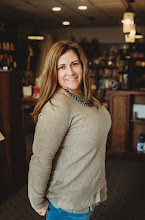
Several
years ago I had the luck to stumble across a novel called Hattie Big Sky.
I read it and time slipped away. I was transported back to the time around
World War I. I fell in love with the determined Hattie as she worked to prove
up on her uncle's homestead claim. As I came upon the last page, tears fell. I
didn't want Hattie's story to be "over." Luckily, Kirby Larson has
written a new book for fans old and new of Hattie. I am beyond grateful to
welcome Kirby to my blog and am excited to share her answers to the following
questions with my students and all of you today.
1. I
adored Hattie Big Sky, but some kids I talk with wish she hadn’t decided
to leave Montana or wish that Charlie had appeared at the end. What is your
reaction to their thoughts?
I
do hate to disappoint readers, but, honestly, the ending felt right to me.
Technically, Hattie didn’t leave Montana – she’s headed to Great Falls at the
end of the story. ;-) I do take it as a compliment, however, that readers have such
strong feelings about the end of the book. I think that means they really
connected with Hattie and her story!
2. I
think the Newbery committee was right on when they recognized Hattie in 2007.
What was that like? Do they call you? Were you in disbelief?
I
was in such disbelief that, for about 30 seconds after hearing the news, I
thought it might be a practical joke. The call came at 6:30 in the morning –
not my most alert time of day. And when the woman on the other end asked if I
was the Kirby Larson who’d written Hattie
Big Sky, I was a tiny bit peeved as I thought it was waaay too early to be
calling to schedule a school visit. I will never forget her next words: “I’m
calling from the Newbery Committee to let you know that Hattie Big Sky has won a Newbery honor.” (I get chills just typing
these words, even after all these years.) I couldn’t breathe! Couldn’t speak!
My husband assures me that I did say thank you but I have no idea what else I said.
I hung up the phone and burst into tears.
The
other thing is that the committee tells you that you can’t tell anyone until
the morning announcement. So I couldn’t even call my mom and dad or our kids! That
was a hard secret to keep.
3. It has
been several years since you released Hattie, what made you decide to revisit
this character?
My
readers! At least, the hundreds who have written to ask me what happened next
for Hattie.
4. I know
you like research and do extensive research for your books. Can you speak to
how you research your books for my students?
When
I was a little girl, I dreamed of being a detective, like Encyclopedia Brown.
Being a researcher is a way I’ve achieved that dream. . .without the danger. I
do every single thing I can think of to research those past times and places,
with a focus on primary resources. For example, I scour second hand stores for
old letters, postcards and photographs (and in fact, there are three images
from vintage postcards in Hattie Ever
After). I read old diaries and
newspapers to get a feel for the things people thought about, fashions, and
prices (Campbell’s soup really did cost 12 cents a can in 1918). I was able to
find a 1921 atlas with a wonderful map of San Francisco. I nearly wore that
out, getting a good feel for routes Hattie might have taken as she moved from
place to place in the city. I also
interview experts, such as someone who knows a lot about airplanes, or about
linotype machines or about baseball. I was stumped as to what kind of camera
Flash, the Chronicle photographer, might have used but finally found an expert
in Dover, New Hampshire, who told me it would have been a Press Graflex.
Secondary
resources, for example books about women reporters or about the history of San
Francisco, help me get the big picture, or help me dive deeper into a
particular topic. But it’s the great details I glean from primary resources
that help me build believable stories.
5. What
challenges did you face when writing for these characters again?
I
worried that I might not be able to get back into Hattie’s voice, but once I
got started, that was not a problem. I think that’s because Hattie and I are a
lot alike! But the biggest challenge was thinking of a new conflict, a new
dramatic question for Hattie to answer in a second book. I didn’t want to
rehash the homestead story; I wanted to give my readers something new and
fresh. As I mentioned in the Author’s Note, I thought Hattie was going to go on
a driving trip across the country in a Model T. But she had other ideas!
6. To say
I love Hattie Ever After is a huge understatement. I did wish we could
spend time with Perilee and her family. I wonder, did you have Hattie by
herself because she still needed to stand on her own?
Oh,
I worked so hard to find a way to include Perilee in this story because I love
her (and her family) so much. But, as you pointed out, this book is about
Hattie learning to figure out who she is and what she wants. That was something
she had to do on her own.
7. As a
writer, what advice can you give my fifth graders in developing their own
writing voice?
First,
I would encourage your students to read, read, read. And to read outside of
their favorite genres. That’s the best way to imprint a strong writing voice. Second,
have fun and play around. I certainly do that. While writing Hattie Big Sky, I did a lot of different
things to get a better handle on Hattie’s voice, including writing letters from
Hattie to different people (a few of those letters ended up in the book) and
writing cinquains to capture the emotion of important events in Hattie’s life.
[A cinquain is a genuinely American form of poetry, 5 lines long. The first
line is 2 syllables, the second line is 4 syllables, the third line is 6
syllables, the fourth line is 8 syllables and the fifth line is back to 2
syllables.] Here’s one example:
The
Trip West
We rode
emigrant cars
on twelve dollar tickets,
not to Circle or Glendive but
to hope.
None of these cinquains
appeared in the first novel because, after I’d written them all, I learned that
this poetry form wasn’t invented until the 1930’s, after the story takes place.
But the time I spent writing them was not wasted. Every bit of this kind of
word play helps me understand my characters better.
8. My fifth graders would like to know if you keep a writing notebook and if you have a special spot that you write in.

I
wish I kept a writing notebook; I should keep a writing notebook. But I
don’t, anymore. If I have a crazy idea for a new book, I open a computer file.
But I do keep research notebooks.
 I
have an office in my house, with a comfy red print reading chair and a soft
cream-colored desk. After I walk Winston the Wonder dog and have my breakfast,
I head to my office. Every single day. Sometimes, when I’m working on
revisions, I print off my manuscript and go to a coffee shop to work. But
mostly you can find me in my office.
I
have an office in my house, with a comfy red print reading chair and a soft
cream-colored desk. After I walk Winston the Wonder dog and have my breakfast,
I head to my office. Every single day. Sometimes, when I’m working on
revisions, I print off my manuscript and go to a coffee shop to work. But
mostly you can find me in my office.
9. We’d
also like to know – what was your favorite book from childhood? What is a great
book you’ve read recently?
When
I grew up, my family didn’t have much money so my favorite book was the very
first one that was all my own: a copy of Alice
in Wonderland that was a gift from my aunt.
As
for the second part of your questions: A bookworm like me can never pick just
one book! But, some books I’ve read lately that I really enjoyed are Three Times Lucky (Sheila Turnage), Will
Sparrow’s Road (Karen Cushman), On
the Road to Mr. Mineo’s (Barbara O’Connor), The Five Lives of Our Cat Zook (Joanne Rocklin), and Minnie McClary Speaks Her Mind (Valerie
Hobbs). I also loved Jennifer Holm’s Eighth
Grade is Making Me Sick, and not just because Jenni asked me to write a
letter that ended up in the book. And a book I completely crazy about is Tom
Angleberger’s Horton Halfpott. I want
Tom to write a sequel. No, a series.
10.
Finally, I have to ask, for my students that have read both Hattie books, will
we ever read about Hattie again? I know we’d all love to read more!
Right
now, I feel pretty satisfied that I’ve completed Hattie’s story. I’m not sure
what more I could say about her. I could possibly see revisiting one of the
other characters –for example, baby Lottie would be 17 in 1935, during the
Great Depression (hmmm. . . maybe she
could go on a road trip in a Model T. . .). I think what readers most like is
reading about strong, interesting (and stubborn!) female protagonists, and I
certainly intend to keep writing about them!
Thank you, Kirby! We can't wait to read what you create for us next!
Check out more from Hattie and Kirby on their blog tour:
Check out more from Hattie and Kirby on their blog tour:
2/4 KidsReads.com
2/6 Nerdy Book Club
2/7 IRA Engage
2/11 My Brain on Books
2/12 Kirkus Reviews