Showing posts with label author. Show all posts

Wednesday, May 22, 2019

Kate Messner - Writing Wednesday


In June of 2009 I attended a professional development session in my district. The presenters were talking about Twitter and how important it was for their teaching life. At the time all I knew about Twitter was that Ashton Kutcher had challenged either Larry King or CNN to see who would have more followers first. It didn’t seem like it was for me. These teachers, who I respected, went on about how important it was, so I joined.

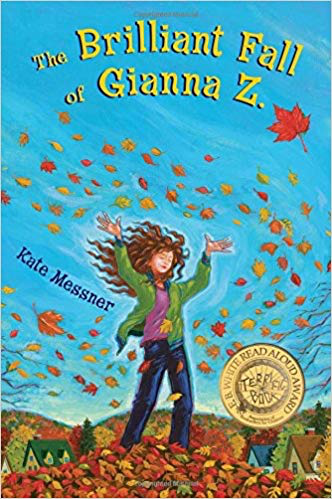
I began poking around, finding other educators to follow, and that brought me to Kate Messner. Kate was teaching seventh grade and I loved what she was sharing from her classroom. After connecting a few times on Twitter, I remember reading a tweet that Kate was publishing a book, The Brilliant Fall of Gianna Z. Just a few months later in the fall, I went to my local bookstore and Kate’s book was on display. I tweeted it to her, so excited, and she said it was the first time she had seen her book “in the wild.” I was beyond thrilled for someone in my profession to be following her dream. I loved the book and we developed our family reading night around in that fall with Kate Skyping in. It was magical.

Over the years I’ve met Kate several times, had her Skype with my class more times than I remember, and seen her present all over the country. I’m thrilled to welcome her to my blog so she can share her writing life with us all. Welcome, Kate!

Talk to me about your writing life - what does it look like?

I tend to do my brainstorming, scribbling, and planning in a notebook (or on big sheets of paper, with colored pens) and then when it comes to actual drafting, I switch to my laptop and Scrivener software. I always do some kind of outline, but what it looks like depends on what the story needs. Sometimes it’s a traditional sort of outline, sometimes it’s more of an idea map or story web, and sometimes it’s something else entirely.

When I’m not traveling for school visits or research, I try to keep a pretty regular writing schedule. On a typical day, I get up at 6 or 7 and answer emails and do other work until my daughter leaves for school at 8. I write from 8-11:30 or so and then take a break to go to the gym until about 1 or 1:30. When I get home, I have lunch and visit with my husband for a while, and then I’ll get back to writing by 2:30 or 3 and write until it’s time to make dinner at 6 or so. The rest of the night is family time, and then I get up and start over.

Where do you get your inspiration?

Everywhere - and that’s why I’d be so lost without my writer’s notebook. I’m always collecting things - character traits, setting details, little bits of dialogue.

What was your journey into writing?

I absolutely loved writing as a kid, but I didn’t realize that being an author was an actual job you could choose. I grew up in a really small town, and no one I knew wrote books for a job. We never had an author visit our school, and we didn’t have Skype back then, so being an author just wasn’t on my radar as a possibility. I went to college for journalism and spent seven years as a TV news reporter before going back to get my teaching degree, and then I spent a wonderful fifteen years teaching 7th grade English. That’s when I really rediscovered how much I loved writing stories, when I was writing alongside my students, and my first six books were published while I was a full-time teacher.

Were you a writer in middle school? A reader?

I was both - and I went through phases in both reading and writing. For a while, I only wanted to read sad books, and then only poetry, and then only nature books. And I went through similar stages with my writing, so I got to experiment a lot. I still do that, really, which is one of the things I love most about my job. I can write about whatever I choose, and I never get bored.

What was your publishing journey like?

Long? I spent seven years querying for my first book and collecting rejections before it was finally published by a tiny regional press. Later on, my first nationally published book, THE BRILLIANT FALL OF GIANNA Z, was rejected 26 times before I found a wonderful agent and editor.

What is the best writing advice you’ve received?

The best writing advice I’ve ever received actually came from a surly anchorman, when I was a nineteen-year-old aspiring news reporter. I was interning at his tv station and had just submitted a news story to him for review. He pointed to one of the lines -- one that I thought sounded especially journalistic -- and asked, “Why’d you write it like this? Why not just say what happened?” I told him the truth -- that I’d been trying to sound like Sheryl Nathans, an investigative reporter at a competing station whose work I admired. He nodded and said, “Oh! There’s your problem. The job of being Sheryl Nathans is taken. By Sheryl Nathans. You’re going to have to figure out how to say things your own way.”

He was talking, of course, about voice. And his advice has followed me from my career as a journalist, through my life as an educator and into my world as a creator of children’s books. Our voices really do define us.

What is some writing advice you’d like to give either to my students or to other aspiring writers?

Carry a notebook! It’s not only great for collecting ideas; it teaches you how to see the world like a writer. You end up noticing things that other people miss, and in addition to being great for writing, that’s a lovely way to live.

Best thing about being a writer?

My favorite things about being a writer are research (because I love spending my days learning and exploring) and connecting with young readers (because they’re the reason I do what I do).
Hardest part of being a writer?

The middle. Every time I write a new book, I hit that place in the middle where it’s still a crummy draft, and the shine of the new idea has worn off, and all I can do is slog through those in-between chapters. I always have to remind myself that when I finish, I’ll be able to revise and really make it shine. But middles are so tough.

What do you do when you’re stuck?

Go for a walk or run. It shakes ideas loose.

Do you have an “inner editor” voice that is unkind?

I do - but I’ve also learned to turn it off so that I can draft. Otherwise, I’d never get past the first page of anything.

What are you reading now that you’re loving?

I just finished a second read of Laurie Halse Anderson’s SHOUT, which is so powerful it felt like it might catch fire in my hands.

Finally, do you want to share the inspiration for your most recent project?

I just finished work on a my newest novel for kids, CHIRP. It’s a mystery set on a cricket farm as well as a coming of age story about family, entrepreneurship, power, and secrets. The cricket-farm element was inspired by a real cricket farm I got to visit in Vermont as well as by this 2013 report from the United Nations Food & Agriculture Committee, suggesting that eating insects might be one way to solve our food crisis and minimize global warming. http://www.fao.org/3/i3253e/i3253e.pdf

Thanks again to the amazing Kate Messner for giving of her time to share her thoughts with us. If you'd like to find Kate online, here are some links. And, side note, I’ve read an early draft of CHIRP. It is amazing and a book to put on your radar for certain.


Wednesday, January 9, 2019

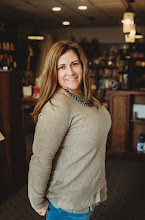
Kate Canterbary - Writing Wednesdays


I can only start this blog series with Kate Canterbary, because she's the reason for it. In the past I've interviewed authors here and on the Voices From the Middle podcast for NCTE. I love hearing about the writing lives of others. However, when I began writing myself, I realized I needed to talk to others who also wrote what I was trying to write. I debated, who should I contact? And would they even reply? 

The idea came to me immediately, I wanted to contact Kate Canterbary. While Kate doesn't know me, I feel like I know her from her Instagram feed. Luckily for her, Boston, Massachusetts and Monticello, Illinois are a distance apart. Otherwise I'm certain I'd be dreaming up ways we could be best friends. I'm so grateful to Kate for answering my questions below. I hope you all will show her some love and can gain some insights into the world of writing through her. And with that, friends, let me introduce you to the amazing Kate Canterbary.


Talk to me about your writing life - what does it look like?

Kate: It looks different every time. I don’t have a singular method and I’ve found each book demands something different. Some books require extensive planning and outlining upfront -- I can’t move forward until I have a precise view of the path forward. Other books come to me in high-level ideas and I just work toward hitting a handful of moments and letting the characters tell me how the rest will work out.

I go between notebook and computer for writing. No real method to that madness--whatever feels right at the moment. Sometimes, the computer screen and the word/page count at the bottom can be really intimidating. Paper can be more forgiving, more approachable. I can write pages and pages, make notes to myself in the margin, cross things out and draw arrows to other things. But when I have a story percolating in my head (or I’m out of time and just need to get it done), typing is the way to go.

I edit almost exclusively on paper. I print out page proofs and mark them up. Some of my best work is the product of x-ing out a page and rewriting it on the back.

I don’t have a strict daily schedule. If there’s one thing I really hate, it’s feeling hemmed in. Even by myself. I write quickly and effectively early in the morning but I have a small child to wake, dress, and feed so my day usually begins after school drop-off. I usually go to a coffee shop or cafe to write for a few hours. Most of the time, I get a fair amount done in that time. If not, I pick up again after the dinner, bath, bedtime routine.

I don’t set word count goals for myself. Again, I hate being boxed in like that. I think progress is more important than hitting a target. Sure, there are times when I just need to get.it.done. In those situations, it’s more about finishing scenes/chapters/beats than word count.

I guess what I’m saying is I’m rebel without a cause ;-)  

Where do you get your inspiration?

Kate: Everywhere. There’s no limit to inspiration.

I was at coffee shop the other day and noticed a woman sitting two tables away. She had light blue hair and an old-fashioned sky hostess tote bag, and she was knitting while listening to something on her phone. I wasn’t sure what she was knitting. Maybe potholders or baby hats or doilies or something. But she stayed there, knitting and listening, for four hours on a Friday morning. And I had so many questions. I wanted to know whether she was knitting for business or pleasure. I wanted to know whether she was listening to a podcast or music or an audiobook. I wanted to know why an otherwise cool, funky chick was in a not-so-cool, not-so-funky town. Had she moved back home after spending some time in New York City or Boston? And if so, why? What -- or who -- brought her home? Was she trying to make a business of her handicrafts or was she filling her time (and hands) with something while she waited on...anything. Was she quietly famous for her knit hat-doily-potholder creations? What did she love and what did she hope for and what scared her?

That was from glancing around a coffee shop one morning. It’s everywhere.

What was your journey into writing?

Kate: I started writing a neighborhood newspaper when I was nine or ten. I reported on local goings-on and while that was plenty entertaining, I didn’t love the constraints of reality. I started writing fiction shortly after. When I was in seventh/eighth grade, I wrote two young adult novels. They were passed around the school bus and one teacher took a look at them too (and summarily crushed my tender writer spirit) but other than that, nothing came of those works.

I spent the majority of my high school and college years were spent working on newspapers, both at school and mainstream publications. I learned a tremendous amount in that time and met incredible people though I always had a fiction story rattling around my mind.

After college, I landed in the non-profit world. It’s a very hustle-bustle place and I did well. There was no time for stories in my head or even much reading. I did that for a little more than a decade before I found myself in books again. That time, it was reading. I picked up a Nora Roberts book at an airport and before my six hour flight was up, I’d read it cover to cover and was ready to read it again.

That book found me at a time when my life was in flux and it reminded me of all the things I love about reading and writing. It took a few more years but after my daughter was born, I had a tremendous amount of nursing and rocking time on my hands. It was the first moment since middle school that I’d had the time to think and let stories unfold again, and I let them. I let them grow and I allowed myself to listen to characters again.

Were you a writer in middle school? A reader?

Kate: Yes and yes. I read Maeve Binchy and Danielle Steel and Lurlene McDaniels and Michael Crichton and Mary Higgins Clark. I also read the entire Sweet Valley series despite the definite disapproval of a teacher who frequently required me to read “real” books.

What was your publishing journey like?

Kate: Nonlinear. Publishing is not a recipe. One cannot hop on a publishing blog, download the steps, and replicate. Sure, you can accomplish each discrete operation with success but that doesn’t mean it will culminate in success.

My first three books had lackluster releases. I think “lackluster” is a mild term. The books didn’t tank but they didn’t have any epic debuts either. And this is where the nonlinear piece comes in--just because they didn’t have strong releases doesn’t mean they haven’t done well. In fact, they’ve found deep and wide audiences.

Finding my audience took time and it took more work than I anticipated at the outset. I learned that no one will care as much about your book as you do and you should never trust anyone--editor, designer, vendor, publicist--with your success. If you want something done, you’re the one who has to make that happen.

I’m a diehard indie author. I’ve turned down traditional publishing deals for a number of reasons and while I don’t want to foreclose future possibilities (because I haven’t met Future Me yet), I am extremely comfortable and content in indie publishing.

What is the best writing advice you’ve received?

Kate: I’m not sure I received this advice so much as stumbled upon the realization that authenticity trumps originality.

We’re all trying to write something different. We all want to be special. But special comes from finding your voice and owning your voice and being authentic in using your voice.

And don’t read reviews. There’s a difference between feedback from an editor and/or critique partner and reviews. Reviews are for readers. The book is done and out of your hands.

What is some writing advice you’d like to give either to my students or to other aspiring writers?

Kate: Feedback is a scalpel, not a cleaver. Approach it that way. Some teachers/editors will give you the perfect pushes and notes that is simultaneously supportive, challenging, and meaningful while also honoring your voice and vision. Some teachers/editors might deliver feedback in a way that’s overwhelming or bruising to the creative’s tender spirit. It’s up to you how you handle that feedback. You could get sad or defensive--and I certainly have--but you can also walk away, yell into a pillow, and then push on the spots that need more work. That can be better. Don’t throw it away. Don’t start over. Don’t abandon your voice and your vision.

Best thing about being a writer?
Kate: The power. (lol) In all honesty, writers get to raise entire worlds from the ground up. They get to create people. And you get to live in the worlds you create. Spend all day thinking about the people and places and experiences. It’s a wonderful, weird power.

Hardest part of being a writer?

Kate: Writing is emotional labor. This might be more salient for the character driven stories I write than other genres but any meaningful story will require the author to carry a significant amount of emotional weight. It’s hard work to get yourself into the heads of characters experience an emotion well enough to write it and it’s hard work leaving those emotions when you close the document or notebook for the day.

What do you do when you’re stuck?

Kate: I write conversations. I think about characters talking about nothing important and let them go. Dialogue comes easily to me and when I’m stuck, I just listen to the characters for a bit. Even if I end up cutting it, those conversations usually get me back into the heads of those characters.

Do you have an “inner editor” voice that is unkind?

Kate: Definitely. That’s one of the reasons I like writing on paper. It feels less official. Like I’m allowed to get away with more. My inner editor is always pushing me to set the scene even when I want to just write the interactions and exchanges. She’s also reminding me that I used the same word two sentences ago and need to find a new one.

What are you reading now that you’re loving?

Kate: I’ve been reading a lot of historical romances recently. I’ve found I’m more confident about my words if I’m not concurrently reading something from the genre I’m writing. I’m a fan of Tessa Dare and Sarah MacLean.

Finally, do you want to share the inspiration for Before Girl?

Kate: This is a great example of highly obscure inspiration. I started writing Before Girl as a weekly serial for my reader group almost three years ago. It came on the heels of a stressful personal time and I was struggling to find my writing mojo so I let myself write for fun rather than a deadline.

The inspiration came in the form of observing several non-interactions at the gym. A woman was walking on a treadmill, listening to tunes, minding her own business. And a man jogging on another treadmill was clearly interested in her. When a treadmill beside her opened up, he hopped off his and moved closer. He kept sneaking glances at her. There were moments when it seemed like he was about to say something but stopped himself. And I watched this for a week.

Thank you, Kate! And, my blog readers, I want to end with this. In my Google Doc to Kate, I ended with my gratitude for her books. Romance books came into my life in July of 2017. I truly believe they have made me stronger and more "me" than I have been in years. I thanked Kate for what she puts out into the world and she wrote this. This, my friends, is what I needed to hear and I'm sharing it here incase you needed to hear it too.

Kate: I really believe romance is the genre of hope--even in the face of seemingly insurmountable challenges--and we could all use a little hope these days.

If you'd like to check Kate out ahead of time, here are some links to where you can find her online. Enjoy! 

Instagram  https://www.instagram.com/katecanterbary/

Twitter  https://twitter.com/kcanterbary

Facebook https://www.facebook.com/kcanterbary/ 

Website  http://www.katecanterbary.com

Books and Main  https://bookandmainbites.com/katecanterbary 
(Register for free on the site to read extras from here, including scenes from the Magnolia Chronicles, which will be a book this year. YAY!)

Amazon https://www.amazon.com/Kate-Canterbary/e/B00OBYI288/ref=ntt_athr_dp_pel_1